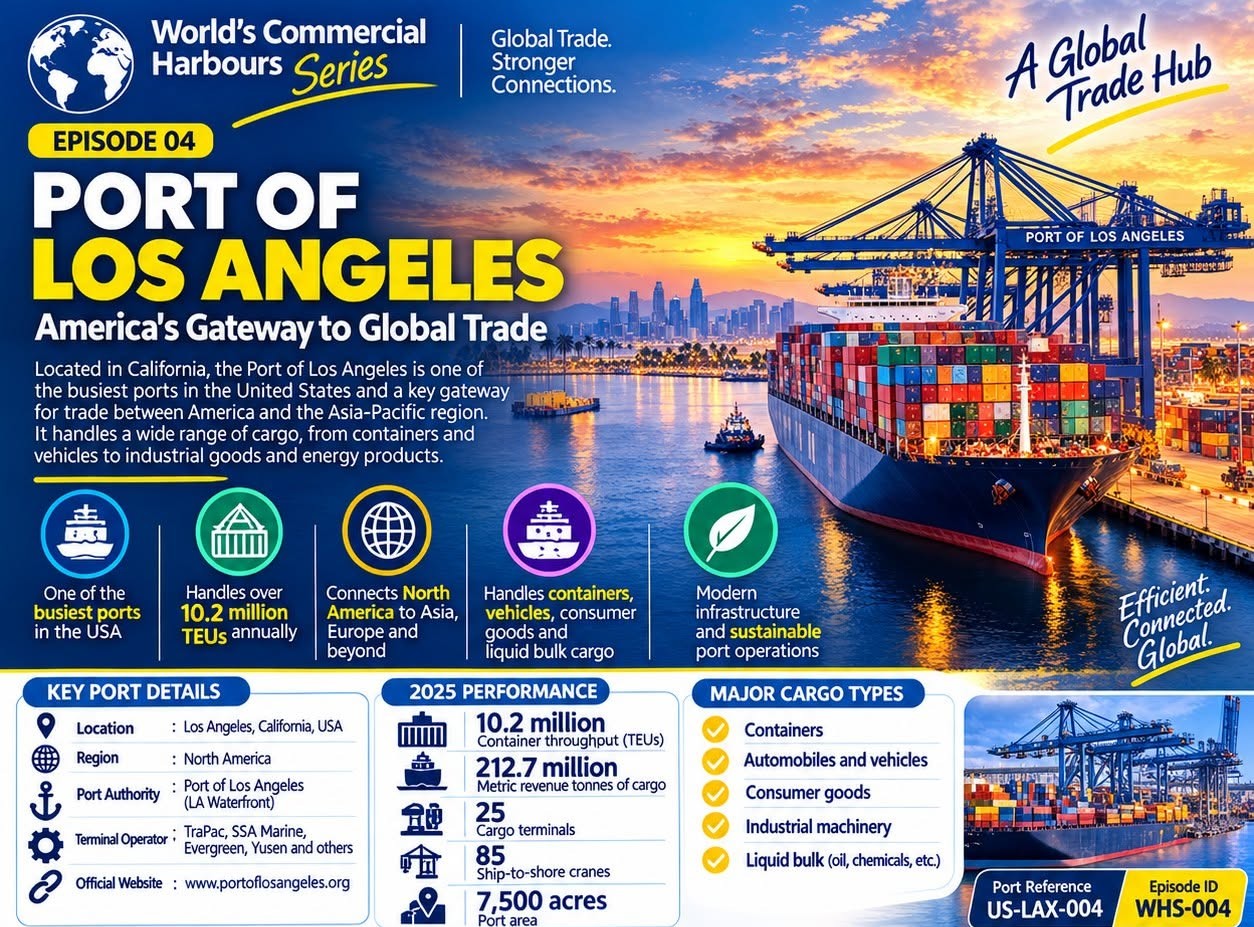
Port of Los Angeles
Topic: Port of Los Angeles
WORLD HARBOUR SERIES | EPISODE 04
PORT OF LOS ANGELES
The Port of Los Angeles, located in San Pedro Bay, California, is one of the most important container ports in the United States. Known as America’s Port, it connects North American businesses with international markets through extensive shipping networks, modern terminals and integrated logistics services.
From electronics and clothing to vehicles, machinery and industrial materials, the port plays a major role in moving goods between Asia, North America and the rest of the world.
━━━━━━━━━━━━━━━━━━
PORT PROFILE
━━━━━━━━━━━━━━━━━━
Port Name: Port of Los Angeles
Country: United States of America
Location: San Pedro, Los Angeles, California
Region: North America
Established: December 9, 1907
Port Authority: Los Angeles Harbor Department
Official Website: https://www.portoflosangeles.org/
━━━━━━━━━━━━━━━━━━
2. PORT PERFORMANCE — 2025
━━━━━━━━━━━━━━━━━━
The port’s official 2025 statistics highlight its importance to international commerce:
10.2 million TEUs in container throughput.
212.7 million metric revenue tons of cargo.
25 cargo terminals, including seven container terminals.
85 ship-to-shore container cranes.
Approximately 7,500 acres of port area.
The Port of Los Angeles ranked as the busiest container port in the Western Hemisphere for 26 consecutive years through 2025. Its facilities support large-scale cargo handling and distribution across the United States.
TEU means Twenty-foot Equivalent Unit, a standard measurement of container capacity.
━━━━━━━━━━━━━━━━━━
3. MAJOR PORT FACILITIES
━━━━━━━━━━━━━━━━━━
San Pedro Bay
The port is part of the San Pedro Bay port complex, alongside the Port of Long Beach. Together, these neighbouring ports form a major gateway for containerised international trade.
Container Terminals
Modern terminals use ship-to-shore cranes, container yards, terminal operating systems and transport connections to move cargo between ships and land.
Rail Connections
On-dock rail facilities help transfer containers to freight trains, connecting the port with inland distribution centres and markets.
Road and Logistics Networks
Truck services, warehouses and freight operators connect arriving cargo with retailers, manufacturers and distribution hubs throughout the country.
━━━━━━━━━━━━━━━━━━
4. WHAT CARGO MOVES THROUGH THE PORT?
━━━━━━━━━━━━━━━━━━
The Port of Los Angeles handles a diverse range of goods, including:
Consumer products, clothing and footwear
Electronics and household goods
Automotive vehicles and parts
Industrial machinery and equipment
Furniture and manufactured products
Steel and other general cargo
Petroleum products and liquid bulk cargo
Agricultural products and other export goods
Imports help supply American consumers and businesses, while exports connect U.S. producers with customers around the world.
━━━━━━━━━━━━━━━━━━
5. WHY IS THE PORT OF LOS ANGELES IMPORTANT?
━━━━━━━━━━━━━━━━━━
International Connectivity:
Extensive shipping routes link the United States with Asian and other global markets.
Economic Impact:
Port activities support jobs in transportation, warehousing, logistics, manufacturing and related industries.
Supply-Chain Distribution:
Rail, road and warehouse networks move goods from ships to inland destinations.
Trade Opportunities:
The port supports both imported products and U.S. exports, helping businesses participate in international commerce.
Regional Cooperation:
Alongside the Port of Long Beach, it forms one of the most significant maritime gateways on the U.S. West Coast.
━━━━━━━━━━━━━━━━━━
6. TECHNOLOGY AND THE FUTURE
━━━━━━━━━━━━━━━━━━
The port continues to develop digital tools and infrastructure to improve cargo visibility and operational efficiency.
Key areas include:
Digital cargo tracking and port data systems
Improved coordination between ships, terminals and transport providers
Rail and intermodal freight connections
Modern cargo-handling equipment
Environmental initiatives and cleaner port operations
Planning tools that help supply-chain partners anticipate cargo movements
Technology and coordination are increasingly important as ports manage changing trade patterns, customer demand and environmental requirements.
━━━━━━━━━━━━━━━━━━
9. OFFICIAL PORT CONTACT DETAILS
━━━━━━━━━━━━━━━━━━
Port of Los Angeles
Address: 425 S. Palos Verdes Street, San Pedro, California 90731, USA
Telephone: +1 310-732-3508
Email: community@portla.org
Website: https://www.portoflosangeles.org/about/contact
These are general port authority contact details. For cargo bookings and terminal operations, contact the relevant shipping line or terminal operator directly.