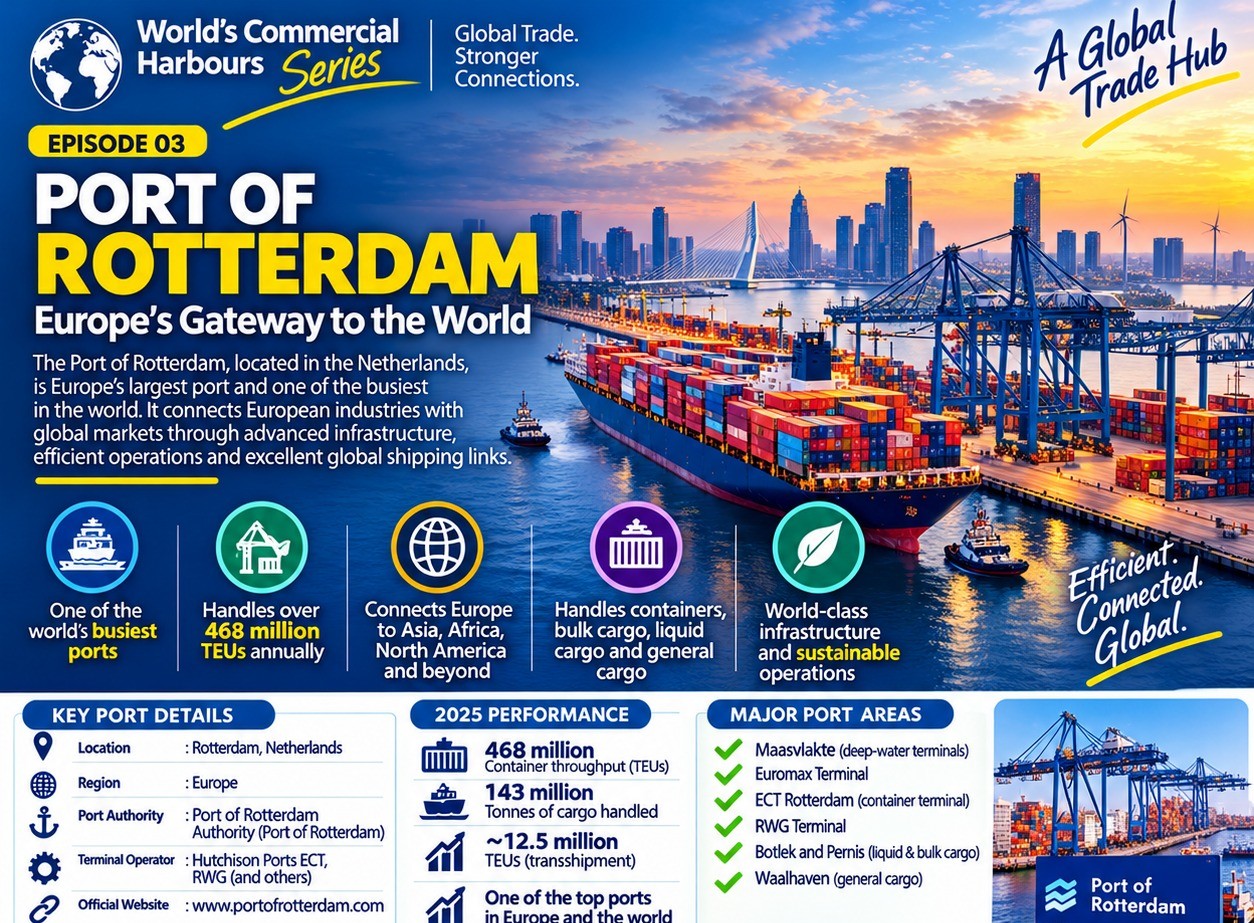
PORT OF ROTTERDAM
Topic: PORT OF ROTTERDAM
WORLD HARBOUR SERIES — EPISODE 03
PORT OF ROTTERDAM: Europe’s Gateway to the World
Harbour Reference: WHS-003 | Port ID: NL-RTM-003
The Port of Rotterdam, located in the Netherlands, is Europe’s largest seaport and one of the most important logistics hubs in global trade. Situated along the North Sea, it connects European industries and consumers with international markets through extensive shipping routes, inland waterways, railways, roads and pipelines.
From container ships and industrial raw materials to energy products and vehicles, Rotterdam plays a major role in keeping European and international supply chains moving.
━━━━━━━━━━━━━━━━━━
PORT PROFILE
━━━━━━━━━━━━━━━━━━
Port Name: Port of Rotterdam
Country: Netherlands
Region: Northwestern Europe
Waterway: North Sea and the Rhine–Meuse delta
Port Authority: Port of Rotterdam Authority
Official Website: https://www.portofrotterdam.com/
Main Port Areas: Maasvlakte, Europoort, Botlek, Pernis and Waalhaven
━━━━━━━━━━━━━━━━━━
2. PORT PERFORMANCE — 2025
━━━━━━━━━━━━━━━━━━
According to the Port of Rotterdam Authority’s 2025 figures:
428.4 million tonnes of total cargo throughput.
14.2 million TEUs in container throughput.
Container throughput increased by 3.1% compared with 2024.
Cargo throughput overall decreased by 1.7% compared with 2024.
TEU means Twenty-foot Equivalent Unit, the standard measurement used for container capacity. These figures show the enormous scale of Rotterdam’s operations and the importance of its container, bulk cargo and industrial logistics activities.
━━━━━━━━━━━━━━━━━━
3. MAJOR PORT AREAS AND TERMINALS
━━━━━━━━━━━━━━━━━━
Maasvlakte and Maasvlakte 2
These modern deep-water port areas accommodate major container terminals and large seagoing vessels. They are central to Rotterdam’s continuing development as an international shipping hub.
Europoort
A major industrial and maritime area supporting cargo handling, energy-related activities and logistics.
Botlek and Pernis
Important industrial zones associated with chemical industries, petroleum products, liquid bulk cargo and storage facilities.
Waalhaven
An established port area supporting general cargo, logistics, distribution and maritime-related businesses.
ECT Rotterdam and other container terminals
Container terminals provide facilities for loading, unloading, storing and transferring shipping containers between ships and land transport.
━━━━━━━━━━━━━━━━━━
4. WHAT CARGO MOVES THROUGH ROTTERDAM?
━━━━━━━━━━━━━━━━━━
Rotterdam handles a broad range of cargo, including:
Shipping containers and manufactured goods
Crude oil, petroleum products and other liquid bulk
Iron ore, coal and other dry bulk materials
Agricultural bulk products
Chemicals and industrial materials
Vehicles and roll-on/roll-off cargo
General cargo, steel products and project cargo
Energy-related cargo, including liquefied natural gas (LNG)
The port’s diverse cargo mix supports manufacturing, energy, agriculture, construction and consumer markets across Europe.
━━━━━━━━━━━━━━━━━━
5. WHY IS ROTTERDAM IMPORTANT TO GLOBAL TRADE?
━━━━━━━━━━━━━━━━━━
Strategic European access:
Rotterdam connects international shipping routes with major European economic centres.
Multimodal transport:
Cargo can move onwards by inland vessel, rail, road and pipeline, helping businesses reach destinations beyond the port itself.
Industrial connections:
The surrounding port and industrial complex supports energy, chemicals, manufacturing and distribution.
International logistics:
Shipping lines, freight forwarders, terminal operators, warehouse providers and transport companies work together within the port ecosystem.
Supply-chain efficiency:
Well-connected terminals and transport networks help goods move between overseas suppliers and European customers.
━━━━━━━━━━━━━━━━━━
6. SMART TECHNOLOGY AND A MORE SUSTAINABLE PORT
━━━━━━━━━━━━━━━━━━
Rotterdam continues to develop its port infrastructure and digital capabilities, with a focus on:
Automated and digitally supported terminal operations
Smart logistics planning and cargo coordination
Rail, road and inland-waterway connections
Energy transition and lower-emission port operations
Carbon capture and storage initiatives
Infrastructure designed to support future maritime demand
The port’s long-term challenge is to combine efficient cargo handling with industrial competitiveness, energy transition and environmental goals.
━━━━━━━━━━━━━━━━━━
9. OFFICIAL PORT CONTACT DETAILS
━━━━━━━━━━━━━━━━━━
Port of Rotterdam Authority
Address: World Port Center, Wilhelminakade 909, 3072 AP Rotterdam, Netherlands
General Enquiries: +31 (0)10 252 1010
Harbour Coordination Centre: +31 (0)10 252 1000
Official Website: https://www.portofrotterdam.com/en/contact
For cargo bookings, terminal operations or shipping arrangements, contact the relevant shipping line, terminal operator or logistics provider directly. The general authority contact is not a substitute for a cargo-booking service.