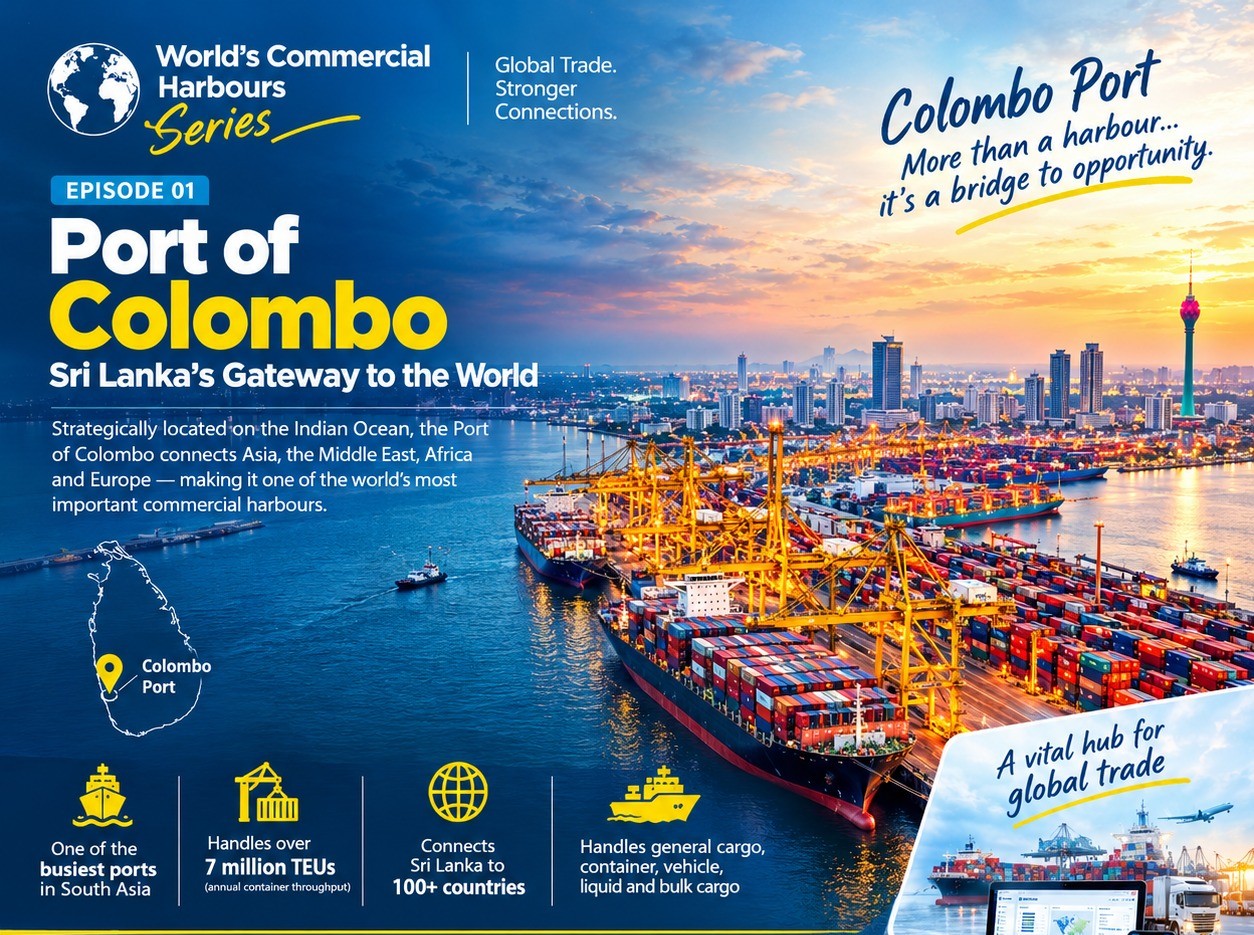
Port of Colombo
Topic: Port of Colombo
World’s Commercial Harbours
Port of Colombo: Sri Lanka’s Gateway to Global Trade
Port of Colombo is more than a place where ships arrive and containers are unloaded. It is one of the most strategically important maritime hubs in the Indian Ocean and a major connection point between Asia, the Middle East, Africa and Europe.
Located on Sri Lanka’s western coast, Colombo benefits from its proximity to the major East–West maritime trade route. This strategic location has helped the port develop into a major container transshipment hub, particularly for cargo moving to and from the Indian subcontinent.
━━━━━━━━━━━━━━━━━━
A Record-Breaking Port
━━━━━━━━━━━━━━━━━━
The Port of Colombo achieved its highest-ever annual container throughput in 2025, handling an impressive:
8,291,178 TEUs
That is approximately 8.3 million twenty-foot equivalent units, compared with 7.79 million TEUs in 2024.
Even more recently, Colombo handled 4.44 million TEUs during the first half of 2026, representing an 11.9% increase compared with the same period in 2025. According to the Sri Lanka Ports Authority, this performance moved Colombo into the global top 20 container ports in the first half of 2026.
━━━━━━━━━━━━━━━━━━
Why Is Colombo So Important?
━━━━━━━━━━━━━━━━━━
The answer is location.
Sri Lanka sits close to one of the world's busiest maritime corridors. This allows large vessels travelling between major Asian, Middle Eastern, African and European markets to connect with Colombo with relatively little deviation from their main routes.
A significant share of Colombo's container business is transshipment—containers are transferred from large mainline vessels to smaller vessels serving regional destinations, and vice versa.
In 2025, approximately 84% of Colombo's container volume was transshipment cargo, highlighting how important the port is as a regional connecting hub.
━━━━━━━━━━━━━━━━━━
More Than Containers
━━━━━━━━━━━━━━━━━━
The Port of Colombo is also part of a much wider maritime ecosystem involving:
Container shipping
Import and export cargo
Transshipment
Terminal operations
Logistics and transportation
Feeder vessel networks
Global supply chains
Maritime services
Every container moving through the port represents a much larger network of businesses, logistics companies, shipping lines, manufacturers, exporters and consumers.
━━━━━━━━━━━━━━━━━━
Why It Matters to Sri Lanka
━━━━━━━━━━━━━━━━━━
The Port of Colombo is a critical part of Sri Lanka's connection to international trade.
Its performance affects not only the shipping industry but also logistics, warehousing, transportation, import/export businesses and many other sectors connected to the country's economy.
The port's record performance in 2025 demonstrates the increasing scale of Colombo's role in international maritime trade.
━━━━━━━━━━━━━━━━━━
The Bigger Picture
━━━━━━━━━━━━━━━━━━
A modern commercial harbour is no longer simply a place for ships to load and unload cargo.
It is a strategic node in the global supply chain.
And Colombo is becoming an increasingly important node in that network.
From a strategic location in the Indian Ocean to more than 8.3 million TEUs handled in a single year, the Port of Colombo demonstrates how geography, infrastructure, technology and global connectivity can transform a harbour into an international trade hub.